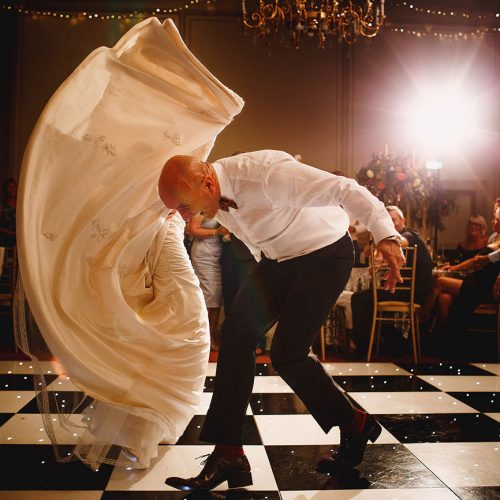
Couples switched how they search for photographers. Your website needs to adapt
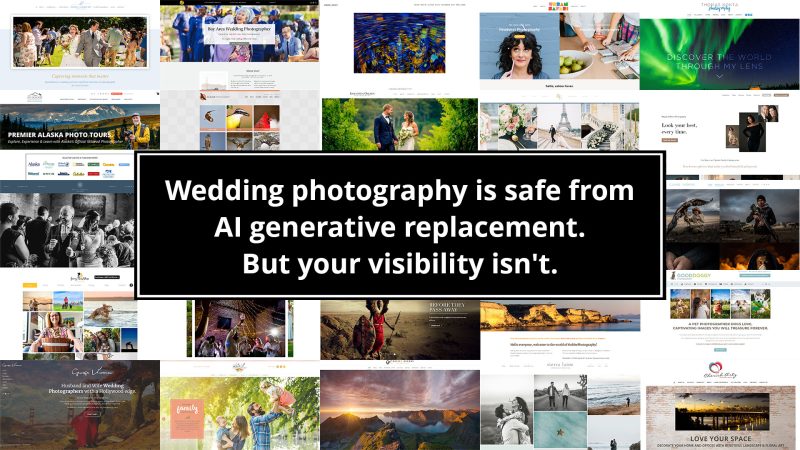
Every website audit I do starts the same way. Before I open the homepage, I ask multiple AI models to find me a photographer in the same niche & city my client works in. More often than not, the photographer doesn’t show up at all.
Visibility used to mean ranking on Google. Now it also means being findable inside ChatGPT, Perplexity, and Google’s AI Overview, because that’s where a meaningful share of couples now begin their search.
I see it constantly on wedding photography websites: jaw-dropping portfolios, awards & years of experience. But the homepage either just has a slideshow, or the hero still says “Capturing your special day with passion.” With no clear differentiator, with a confusing nav menu, with hard-to-find service & contact information. The photographer thinks they’re presenting their craft. But the visitor is left impatient and confused. Five seconds, decision made.
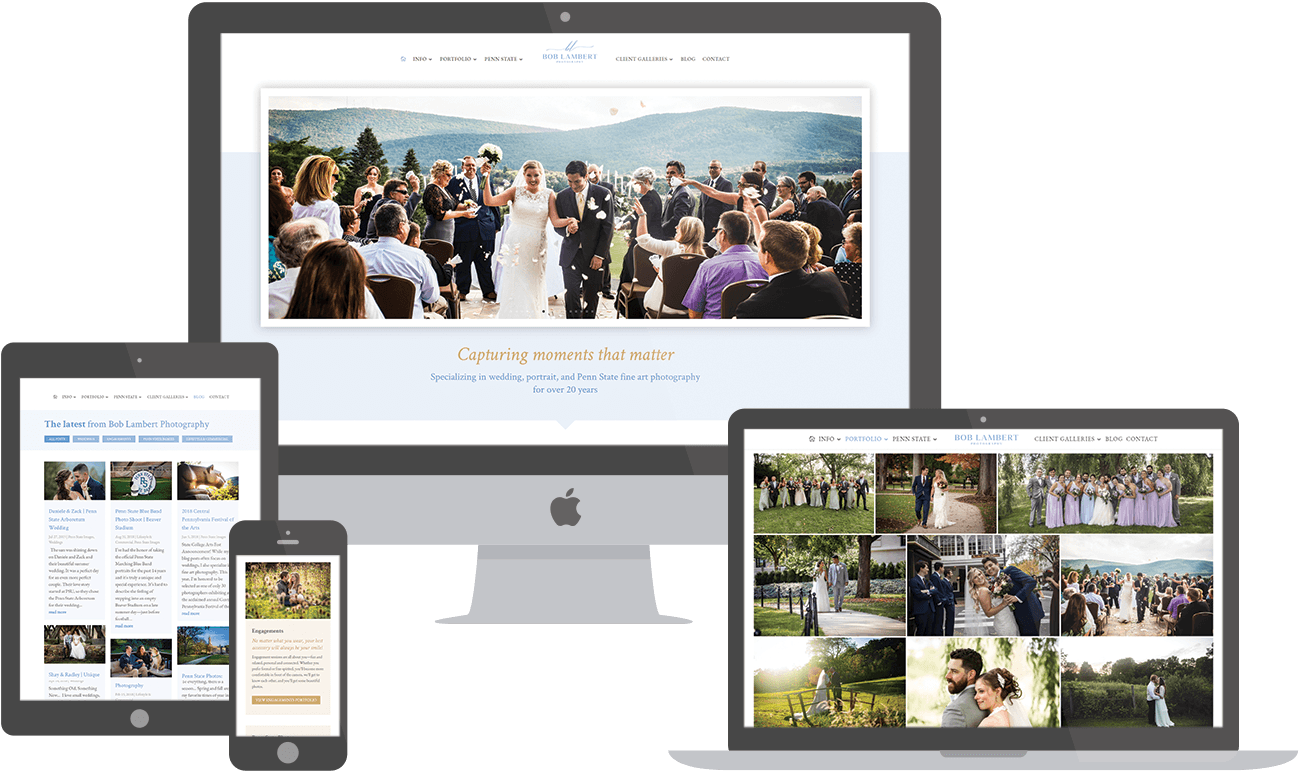
Read your homepage’s first sentence out loud. Could any of your nearest competitors use that exact line without changing a word? If yes, you’ve handed the visitor a spreadsheet. And spreadsheets often pick the cheapest viable option.
The same website, a new front door
Your homepage probably doesn’t match how couples now start. They don’t open ten tabs anymore. They ask Google’s AI Overview, ChatGPT, or Perplexity to find them a documentary wedding photographer.
I ran an experiment myself: same query, ChatGPT and Gemini, side by side. Zero overlap: both “admitted” that they never looked at a single photo. ChatGPT pulled from articles, forums, and “best of” lists. Gemini pulled mainly from Google Maps and schema tags.
A wedding photographer came to me last month because her enquiries had dropped while her Google ranking was flat. ChatGPT had no idea she existed.
Documentary photography is one of the safest niches from AI generative replacement. Your work is structurally protected. But your visibility isn’t!
There’s no position one here. AI surfaces you when your site matches the prompt. The clearest site wins, not the biggest or the one with the most backlinks. I’ve watched a two-year-old practice with two hundred monthly visitors land first in ChatGPT for her niche, ahead of competitors with a decade of backlinks. And you can treat this as an opportunity.
AI doesn’t look at your photos, it reads text. Two-minute test: ask ChatGPT “what can you tell me about [your business name]?” Half the photographers I run this on get a description of who they were three years ago, scraped from a stale Instagram bio. A confused AI doesn’t recommend you.
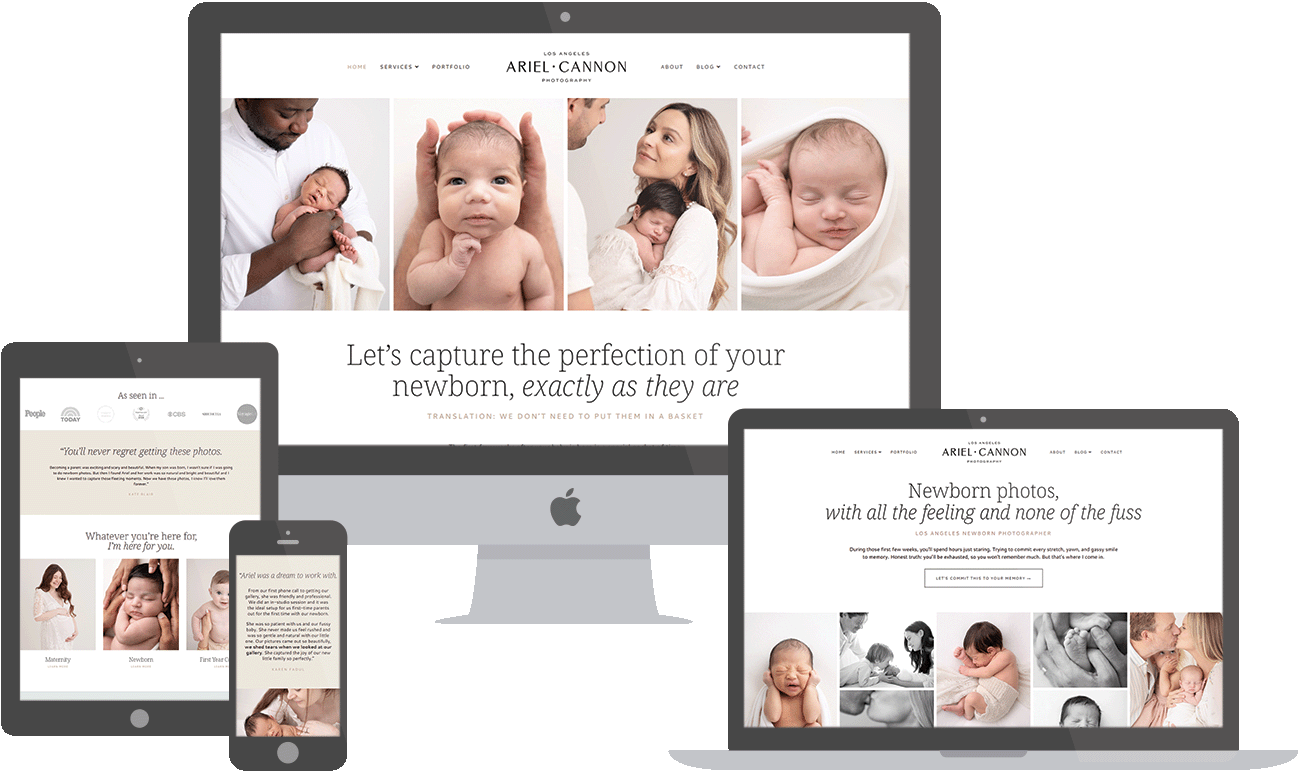
The fix isn’t to clutter your homepage with paragraphs of copy or hide your photos behind text. It’s to do two jobs in the same homepage hero section. Name what you do specifically enough that AI can describe you, and name a real worry your couples have specifically enough that a human keeps scrolling.
The 2026 visibility playbook for documentary photographers
AI Overviews already reach more than a billion people. Couples have stopped browsing lists of twenty photographers. An agent reads your site, picks three names, hands those over. The agent is the first visitor you have to win. Seven things you can act on this afternoon.
1. Name your niche so an LLM can quote it. Run the swap test on your homepage. Lift your H1 and opening paragraph, drop another reportage photographer’s name in. If the page still reads as theirs, you’ve given AI nothing distinctive to attach to your name. Weak: “Documentary Wedding Photographer” or “Wedding Photographer in Bristol.” Strong: “Unposed wedding photography for couples who hate posing, based in Bristol, shooting across the South West and Europe.” The second one is specific enough that AI can quote it back verbatim. The first belongs to four hundred other sites.
2. Pick your specialties on purpose. Wedding plus family photography is fine, that’s two related specialties under one craft. The trap is sprawl. If your service pages cover weddings, family sessions, headshots, real estate, and the occasional school yearbook, you’ve told AI you’re a generalist. Generalists don’t get surfaced when a couple asks for a documentary wedding photographer. Cut the unrelated services to a separate domain, or drop them. Two related specialties is the sweet spot.
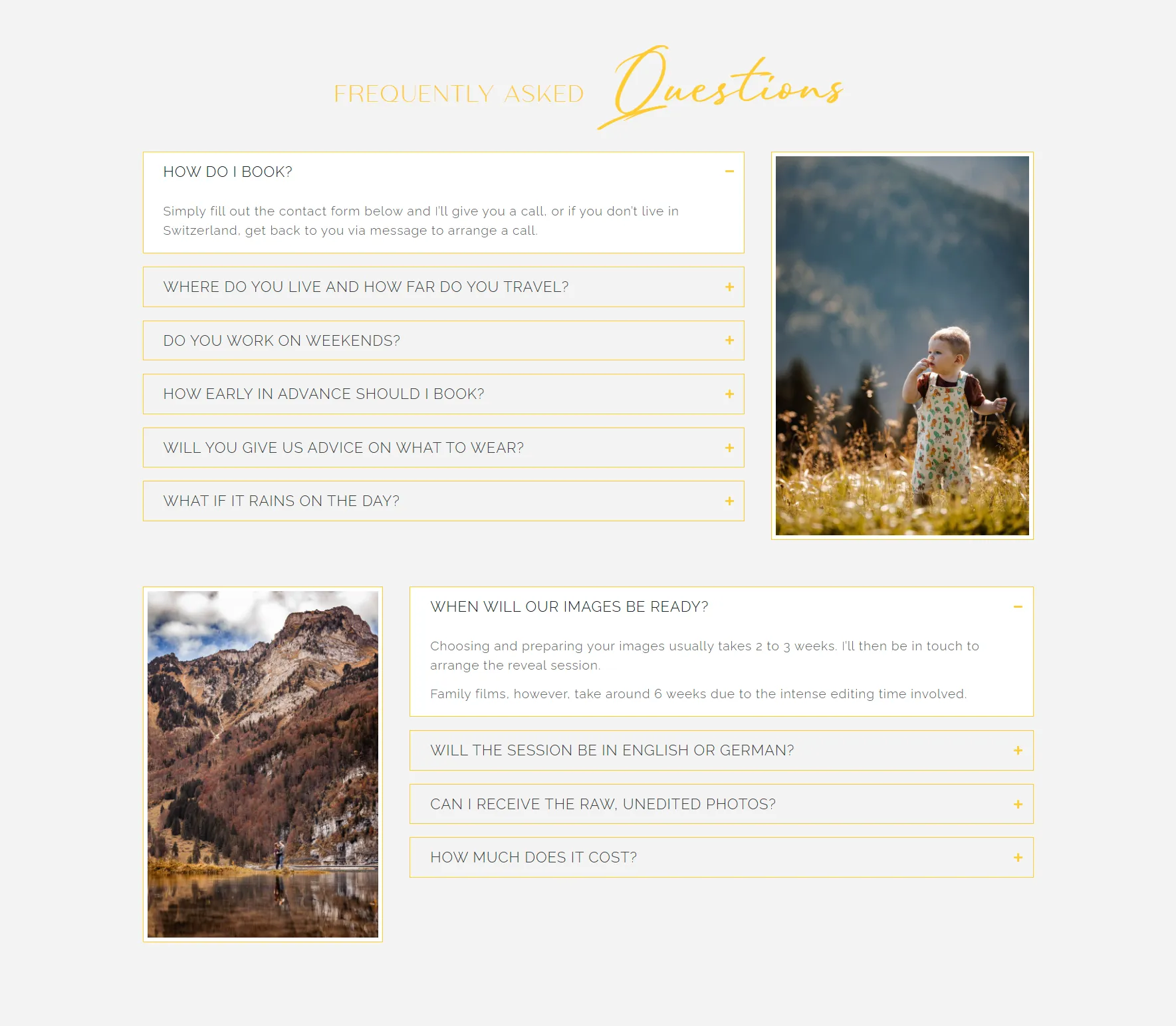
3. Fix your structured data. The most technical action on the list, so block out an afternoon and only do it once. The single highest-impact move: add an FAQ section to your homepage as a visible accordion (couples actually use these) and mark it up with FAQPage schema. AI search engines actively quote these in answers. One change, two audiences served. The rest of the schema stack is worth the same afternoon: Article JSON-LD with sameAs linking your author identity to LinkedIn, Instagram, your TiR profile, and any award directories you appear in; BreadcrumbList; LocalBusiness with your service polygon; Person schema for you and your partner if you shoot as a duo.
4. Tier your robots.txt by crawler. Not every AI bot visiting your site sends humans back. Cloudflare’s March 2026 crawler report tracked, for each AI bot, how many times it scraped a website for every actual human visitor referred. GPTBot scraped roughly 1,300 times for every visitor sent. ClaudeBot scraped almost 24,000. Both are training crawlers, and the gap mostly reflects how aggressively each company indexes the web. The point is the same: training crawlers eat your bandwidth and rarely send anyone back. Query-time bots, the ones that fetch your page live when a couple asks ChatGPT a question, are the ones that send actual traffic. In your robots.txt, allow or block by user agent. Block training crawlers if you want, always allow query-time bots through.
5. Switch on Content Credentials in Photoshop and Lightroom. A one-time toggle in preferences, and from then on every export is signed with a tamper-evident certificate. C2PA is the standard behind it, backed by Adobe, Microsoft, the BBC, and most major camera manufacturers. It’s a “made by a human” signal, and it’ll matter more every quarter as AI-generated photos get harder to spot. Documentary work has the most to gain. The whole value of unposed coverage is that it’s real. Make that real machine-readable.
6. Build off-SERP presence on purpose. Search your own brand name today. Do you see a Google knowledge panel, a Business Profile, Fearless or WPJA listings, a TiR collection, a publication mention? That spread is what an AI agent reads as “real photographer with a footprint.” If your result is your own site followed by six pages of Pinterest pins, you’re invisible to the agent.
7. Publish case studies, not just testimonials. Testimonials are nice, but they’re often too short to make a real impression or to help with SEO. Case studies are different beasts: longer, story-shaped pieces that both humans and AI tools devour. One paragraph on the couple, one on the venue, one on the brief, one on what you delivered, one on the outcome. AI tools love context and depth, and they reward it with more visibility. Two or three detailed case studies on your site will do more for your credibility (and SEO) than a whole page of short quotes.
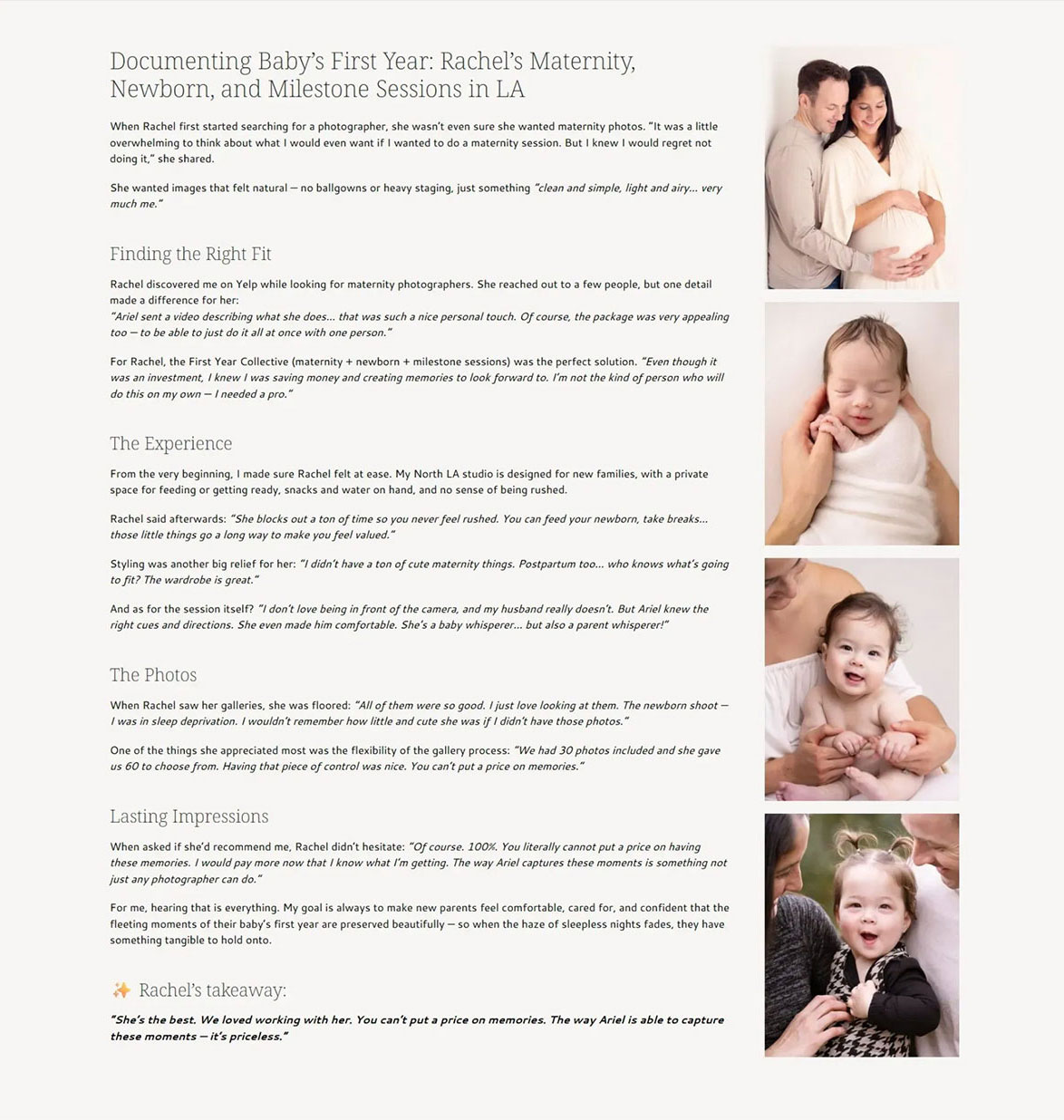
Finding all of these yourself is a stretch, which is why my website audit now scores all five zero-click readiness traits as a dedicated section, alongside the rest of the audit.
What actually moves the needle for your business
AI search rewards the photographer it can describe, not the one with the most pixels. Specific naming compounds. Peer mentions compound harder. Recent research has brand mentions across the web as the strongest predictor of AI Overview visibility, beating backlinks and domain authority. A TiR collection, a directory placement, a publication feature, each one is a vote AI counts. The currency isn’t who links to you, it’s who talks about you.
For the introvert photographers reading this, that bit matters most. You may not network in person. You may dread social media or any sort of outreach and PR work. Your website is the “closer”, doing the work you can’t do at a venue. The shortest photographer bio I ever audited was five words. The longest, dullest one was two thousand. Guess which one was booked out.
If you want a structured walkthrough of the changes I usually recommend after an audit, my free 7-day email course at foregroundweb.com/subscribe covers homepage, SEO, booking paths, positioning, and more, in plain steps.
About the author
Hi, I’m Alex Vita, the web designer and writer behind ForegroundWeb. I’ve worked with photographers exclusively since 2009, running website audits, makeovers, and bespoke builds for ambitious photographers across the world.
If your site needs a proper rebuild without changing domains, my website makeover runs about ten days of focused work. For bigger jobs, custom website builds work to a fixed quote upfront. Or if you’d rather a diagnostic first, the website audit is yours at 20% off as a TiR member, and you’ll get the full fee credited back against any project you book with me within a month.